
Great Fiji Shark Count a success!
The seas around the islands of Fiji are teaming with ocean life, and lots of sharks! From tourism operators, adventurers, marine researchers, coastal fishermen, deep sea anglers, anyone with a love for the blue and the wonders living in it, it’ was a time to check who is alive down there, and how many.
The Great Fiji Shark Count an initiative of Fiji tourism operators and organised by Helen Sykes, the co-ordinator of Fiji Coral Reef Monitoring Network will be held throughout this month and again in November. Helen stated: "We’ll count the sharks, rays and turtles during diving, snorkelling, fishing trips or on boat voyages and contribute to shark research and protection." The event follows on the heels of another of her work the Great Fiji Butterflyfish Count in 2008-2009.
And that is just what happened!
CEO and Save Our Seas Photographer Peter Verhoog was there, and took some incredible pictures.
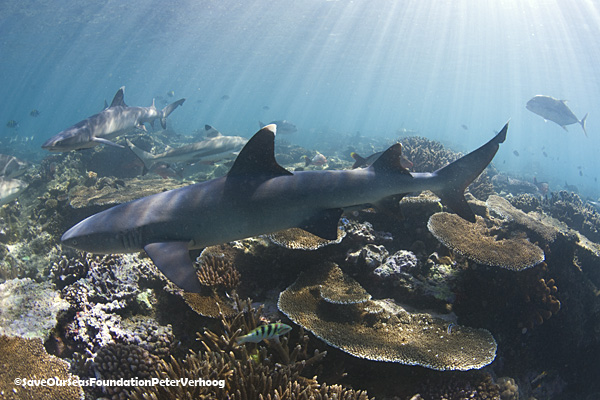
A whitetip Reef Shark in Shallow Waters
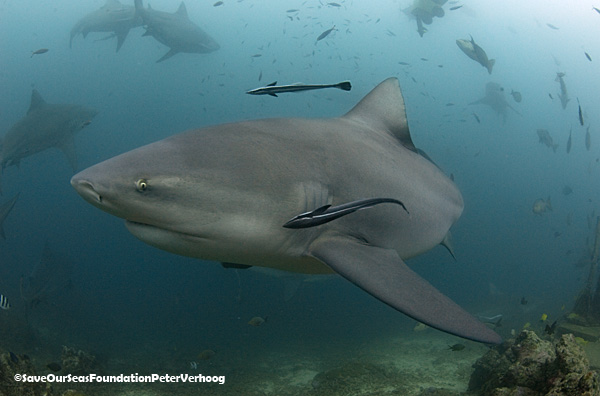
A bull shark in the Fiji Shark Reef Marine Reserve
The next week is devoted to obtaining all the sighting reports from the participants and then Helen and a gaggle of volunteers will embark on the tedious task of analyzing and formatting everything. A first informal analysis can be expected at the Dive Fiesta, and a proper review in a few months.
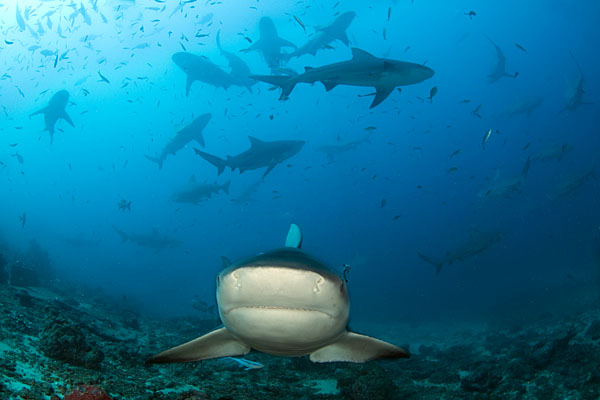
Curious Bull Shark © Save Our Seas Foundation / Peter Verhoog
And there was even a very remarkable guest, a Mobula tarapacana (Chilean Devil Ray), seen from the boat off Frigate’s Passage right under the surface, and never observed in Fiji before!
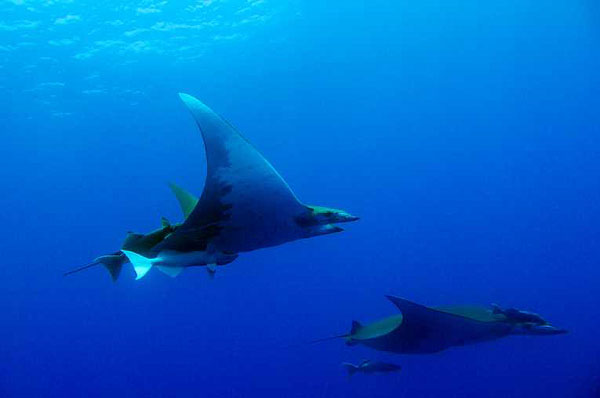
Unexpected guest! (Picture © Shutterstock)