The Save Our Seas Foundation is a non-profit organisation that establishes and supports conservation, awareness, scientific research and educational projects focused on the need to protect our world’s oceans.
Palau Shark Week was officially opened this weekend by Palau’s Minister of State, Sandra Pierantozzi, who showed that the Palauan Governement places a high value on conserving its precious marine environment and in particular its sharks.
Palau Shark Week Opening Night (Tova Bornovski on the right and Finny the Shark far right)
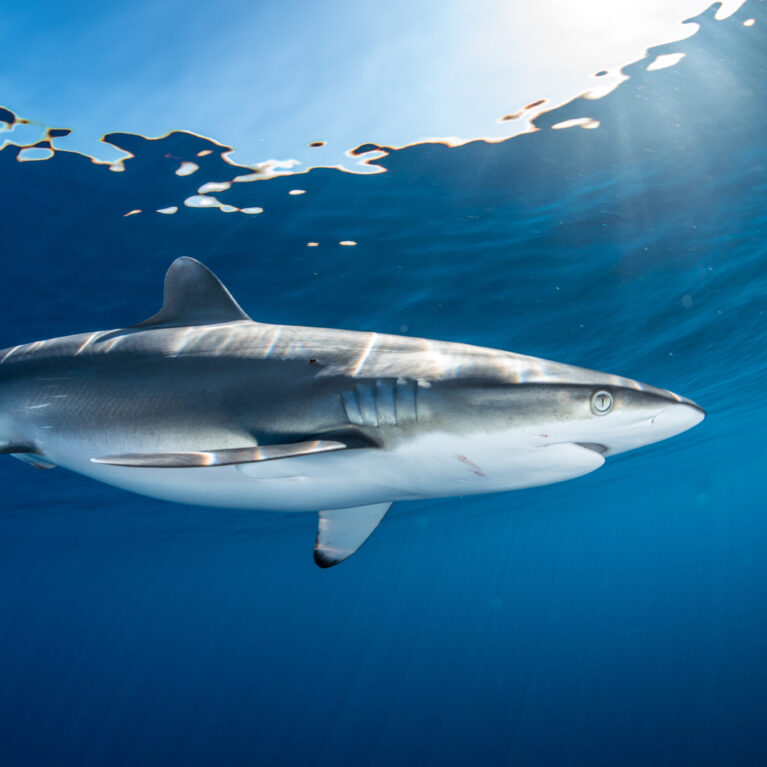
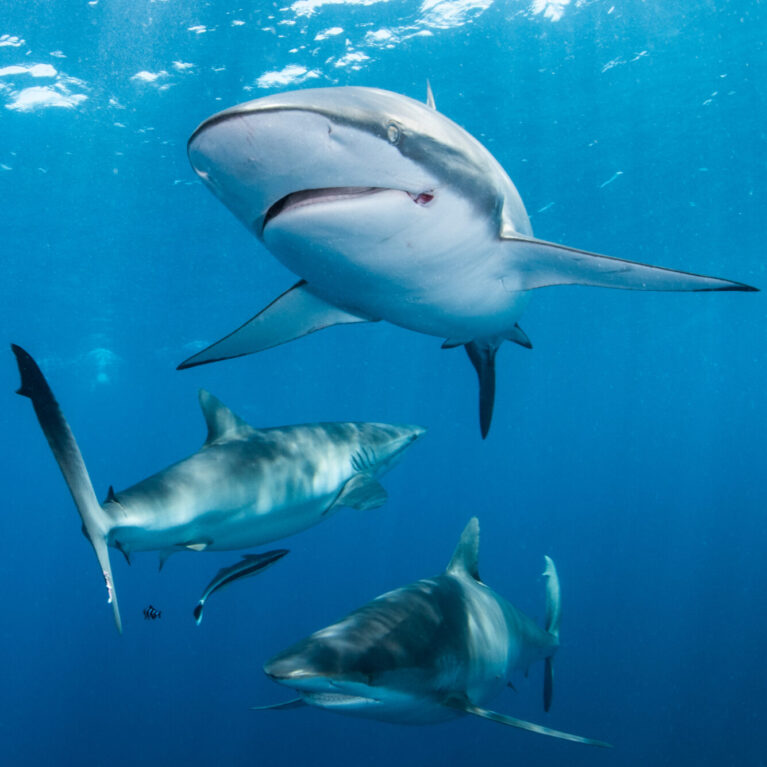
SOSF project leader Tova Bornovski introduced Francis Toribiong, a Micronesian Shark Foundation board member, who shared some insights on how the idea of a shark sanctuary was initiated. The sanctuary was established last year with a complete ban on all shark fishing in Palauan waters. Palau was the first country in the world to take such bold measures to protect sharks, whose numbers are drastically declining.
I arrived in Palau earlier today and my first thought was the realisation that apart from water there is nothing else around me. It’s a bit of scary thought. Yet as I’ve been discovering more about the island and its truly exotic culture this feeling of isolation is quickly replaced by fascination.
In Palau, the ocean plays a very important role and there are dozens of legends that tell about the creation of turtles, mermaids and, of course, sharks. I also learn that Palauans are true conservation pioneers, who created their first marine protected area in the 1950s.
Palau, the world's first shark sanctuary. Photo: Save Our Seas Foundation
Tova Bornovski, SOSF project leader and owner of local dive shop ‘Fish ’n Fins’ is the organiser of Palau Shark Week. She explains, “We created the Micronesian Shark Foundation and Palau Shark Week because we wanted answers to our questions. We need to protect the sharks but there is still so much about them we don’t know.”
Save Our Seas Foundation Chief Scientist, Dr Rupert Ormond will be attending the CITES 15th Conference of the Parties (CoP15) that will consider 4 proposals to protect 8 shark species. The conference takes place from 13 – 25 March 2010 in Doha, Qatar.
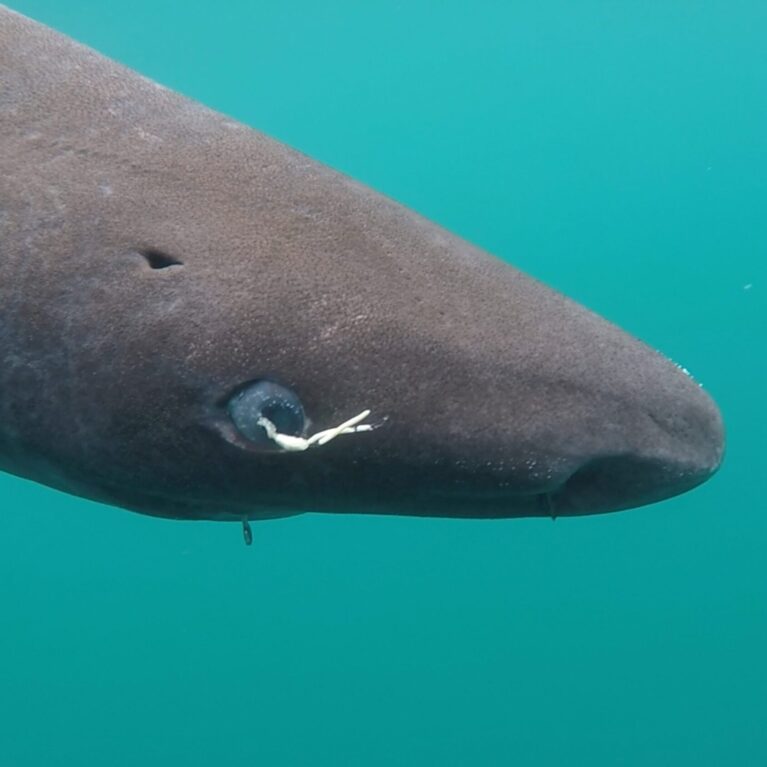
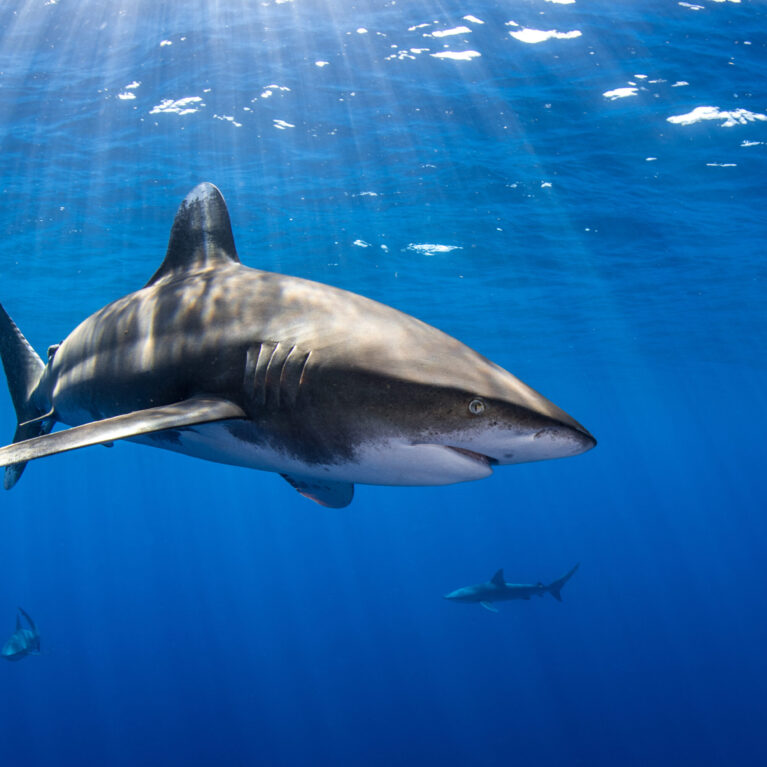
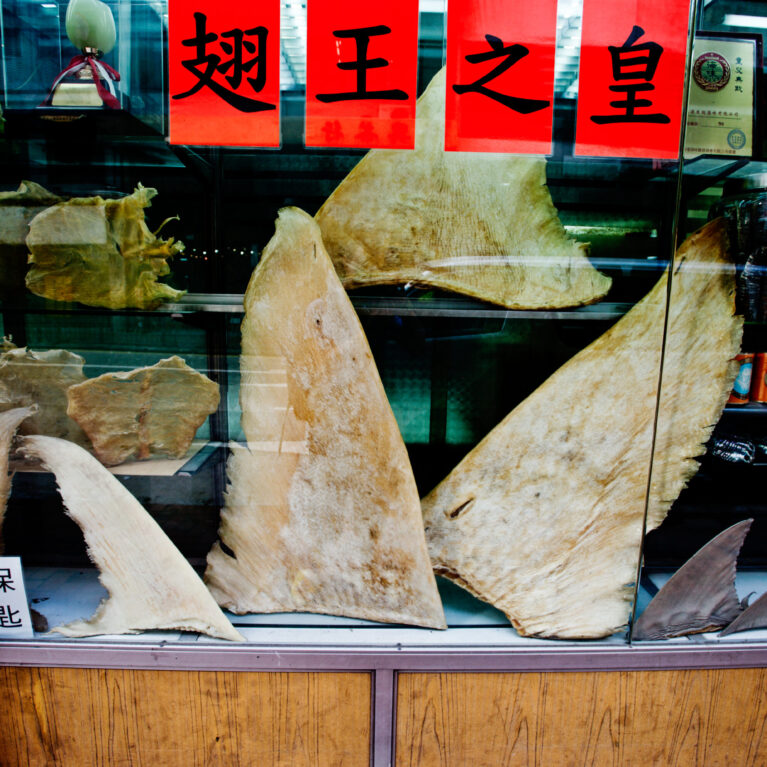
Four proposals to list shark species under the Convention on International Trade in Endangered Species (CITES) have been offered for consideration. The proposals aim to add eight species – spiny dogfish, porbeagle, oceanic whitetip, scalloped hammerhead, great hammerhead, smooth hammerhead, dusky and sandbar sharks – to CITES Appendix II.
All eight of these shark species are:
Subject to persistent demand that drives targeted fisheries and retention of bycatch
Traded internationally in substantial quantities
Included in the lowest productivity category (intrinsic rate of population increase <0.14) under criteria developed by the Food and Agricultural Organization (FAO) for CITES listing of commercially exploited aquatic species
Inadequately managed by most countries, and
Not subject to fishing limits under any regional fisheries management organization (RFMO).
Listing these shark species under CITES Appendix II is:
Essential for ensuring that international trade is held to sustainable levels
Complementary to fisheries management efforts
Key to improving data on the nature and extent of fisheries and trade
Supported by the CITES Secretarial, TRAFFIC and IUCN, and
Consistent with the FAO International Plan of Action for Sharks
The shark proposals include solid justification that the species meet the CITES criteria for listing. The proponents have agreed to delay the effect of these listings by 18 months to enable Parties to resolve related technical and administrative issues.
Recommendation: Support all shark proposals (15,16, 17 & 18) at CITES CoP15.
Alison Kock presenting her white shark research to a sold out audience at Mote Photo: Morne Hardenberg
On 15 February Alison Kock, Project Leader of the Save Our Seas funded White Shark Research Programme in Cape Town, gave a presentation to a sold out audience of over 300 people in Sarasota, USA. Mote has been a leader in marine research since it was founded in 1955 by legendary shark researcher Dr. Eugenie Clark. Today it has evolved into seven research centres, is home to more than 230 staff members, including about 40 Ph.D. scientists who lead their respective fields. Public outreach has also become a key part of their mission.
As part of the Wavescapes Surf Art Exhibition held in December 2009, a local surfer shaped a life-size surfboard entirely from ice. Conn Bertish created the ice board as a visual poem underlining the global warming crisis in a powerful way.
“As surfers we are literally on the frontline of global warming and the effect it is having on the ocean environment. I believe every surfer has a role to play in this most pressing issue,” says Bertish. “The board of ice is a simple metaphor for what is a happening right now to all the world’s glaciers and ice caps. As this board melts so do our glaciers and million year old ice caps. So we each need to take stock of how our actions are affecting the increase in Global Warming. The board is a simple graphic reminder of this.”
The ice-board was sculpted over two days by Bertish with Ice Art in an ice-preparation / sculpting fridge in Cape Town, before being transported in two pieces to Depasco Café where it was displayed to the public as part of the Wavescapes Surf Art Exhibition which raised $23,000 for ocean conservation.
The Save Our Seas Foundation is committed to preserving our marine environment for future generations. With your help we can and will make a difference. Find out how you can support our work.