
BRUVS in the Galápagos
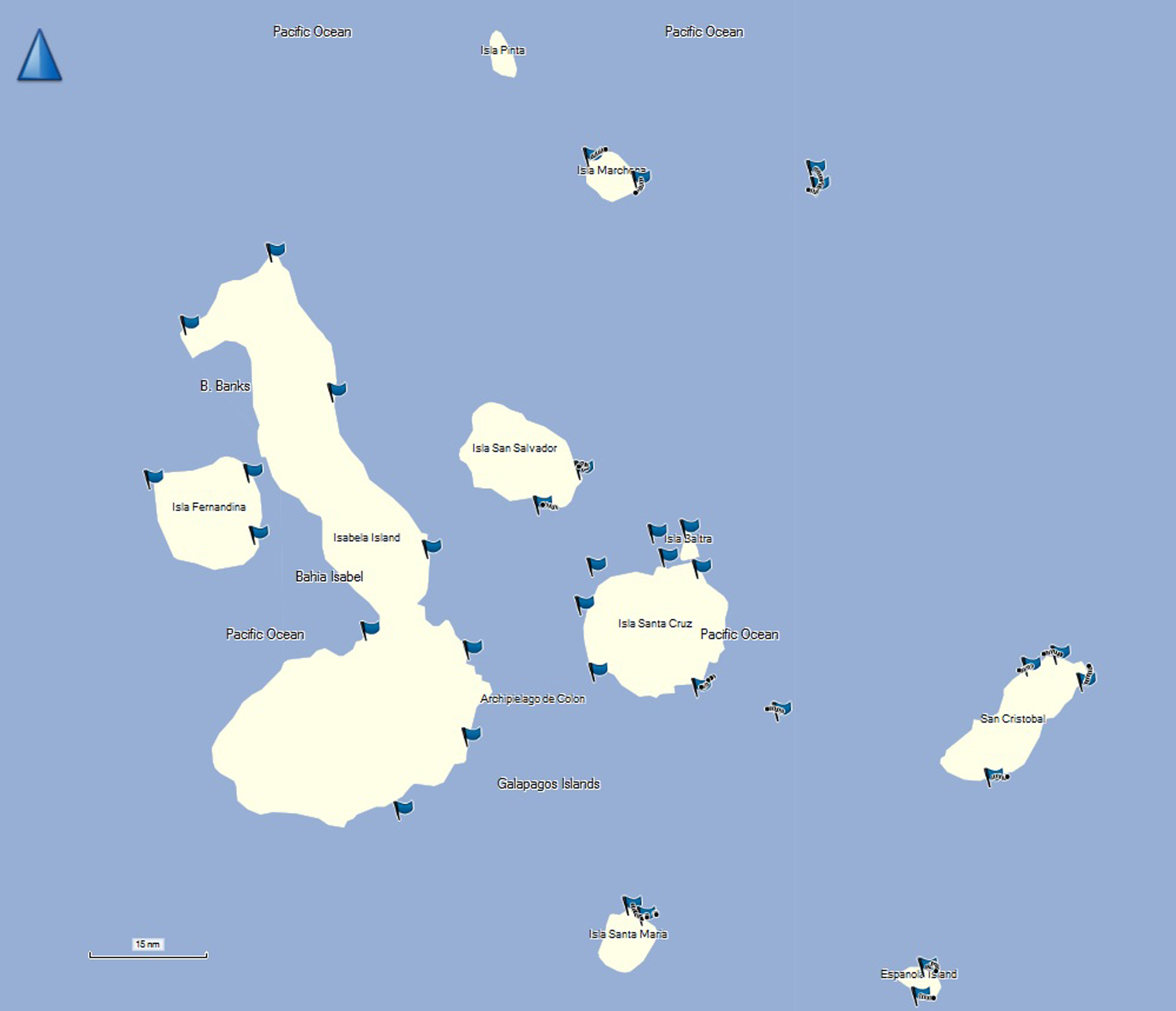
Location of the study sites (blue flags) across the archipelago. Eight cameras are deployed at each site. Photo © Charles Darwin Foundation
Last year the Charles Darwin Foundation, in partnership with Curtin University (Western Australia) and Massey University (New Zealand) and with the institutional support of the Galápagos National Park Directorate, extended the scope of its shark ecology studies to pioneer the use of baited remote underwater stereo-video systems (stereo-BRUVs) in the Tropical Eastern Pacific. An ambitious study was designed in order to tackle the lack of consistent data about the population structure and distribution patterns of sharks across the Galápagos Marine Reserve. ‘This information is vital for understanding the role of the Galápagos Marine Reserve in protecting threatened shark populations,’ explain Dr Pelayo Salinas de León of the Charles Darwin Foundation and Professor Euan Harvey of Curtin University, who lead the project. During 2015, 750 video stations provided some 1,250 hours of footage that is currently being analysed by David Acuña, a PhD candidate in shark ecology at Massey University.
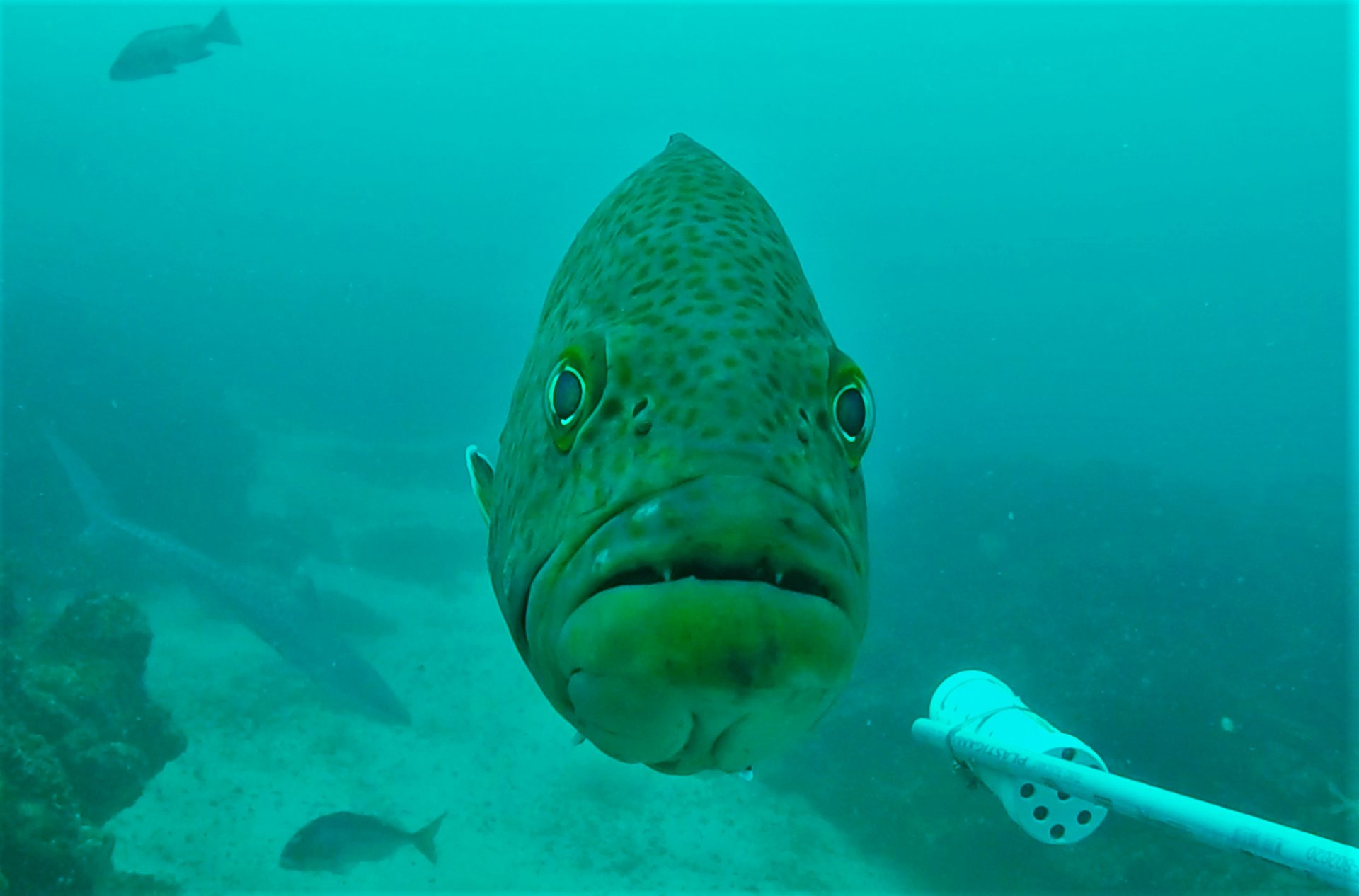
A Galápagos sailfin grouper Mycteroperca olfax takes a close look as a juvenile tiger shark Galeocerdo cuvier swims past in the background. Photo © Charles Darwin Foundation
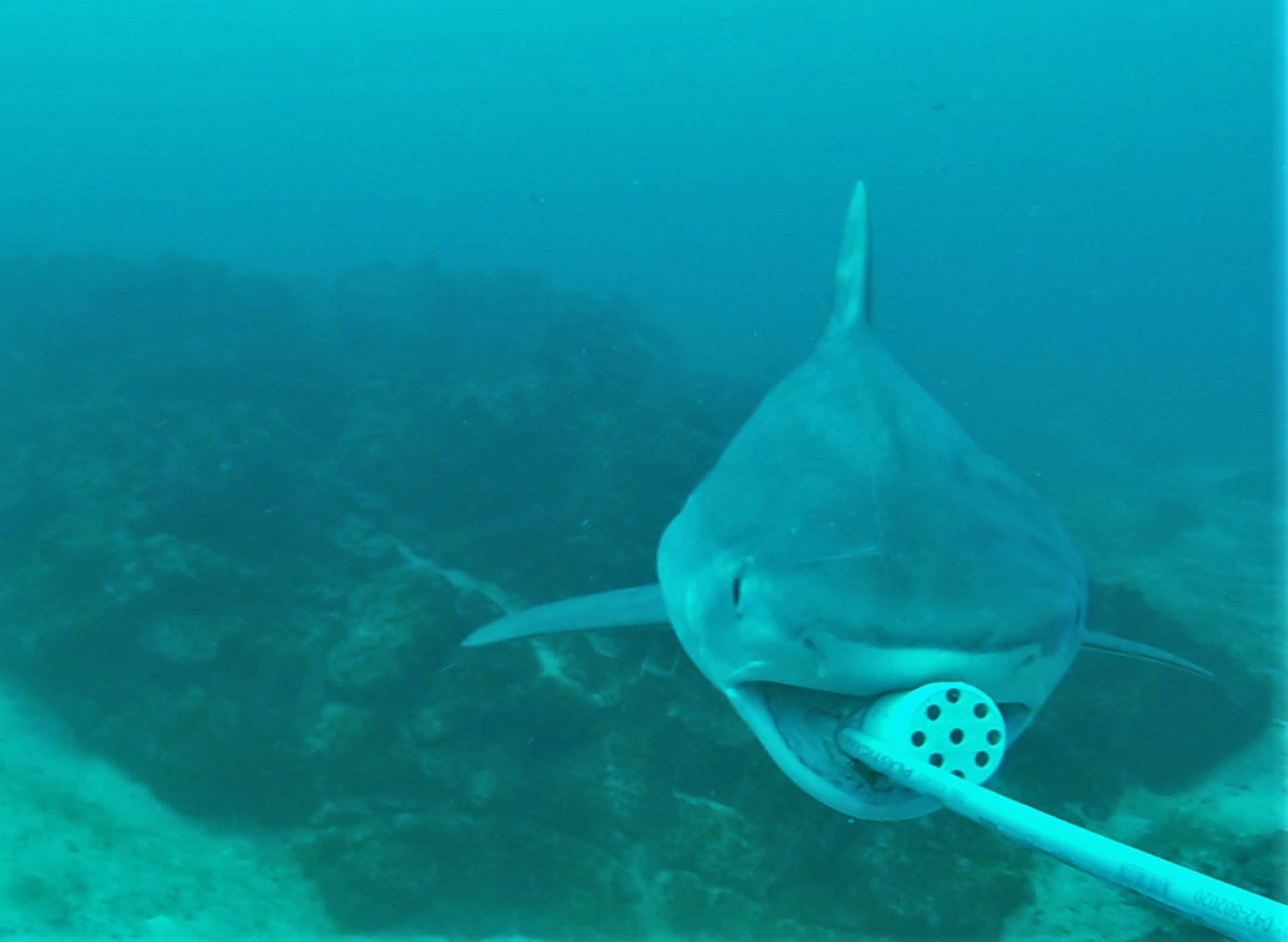
A large male tiger shark Galeocerdo cuvier has a go at the bait (yellowfin tuna). Photo © Charles Darwin Foundation
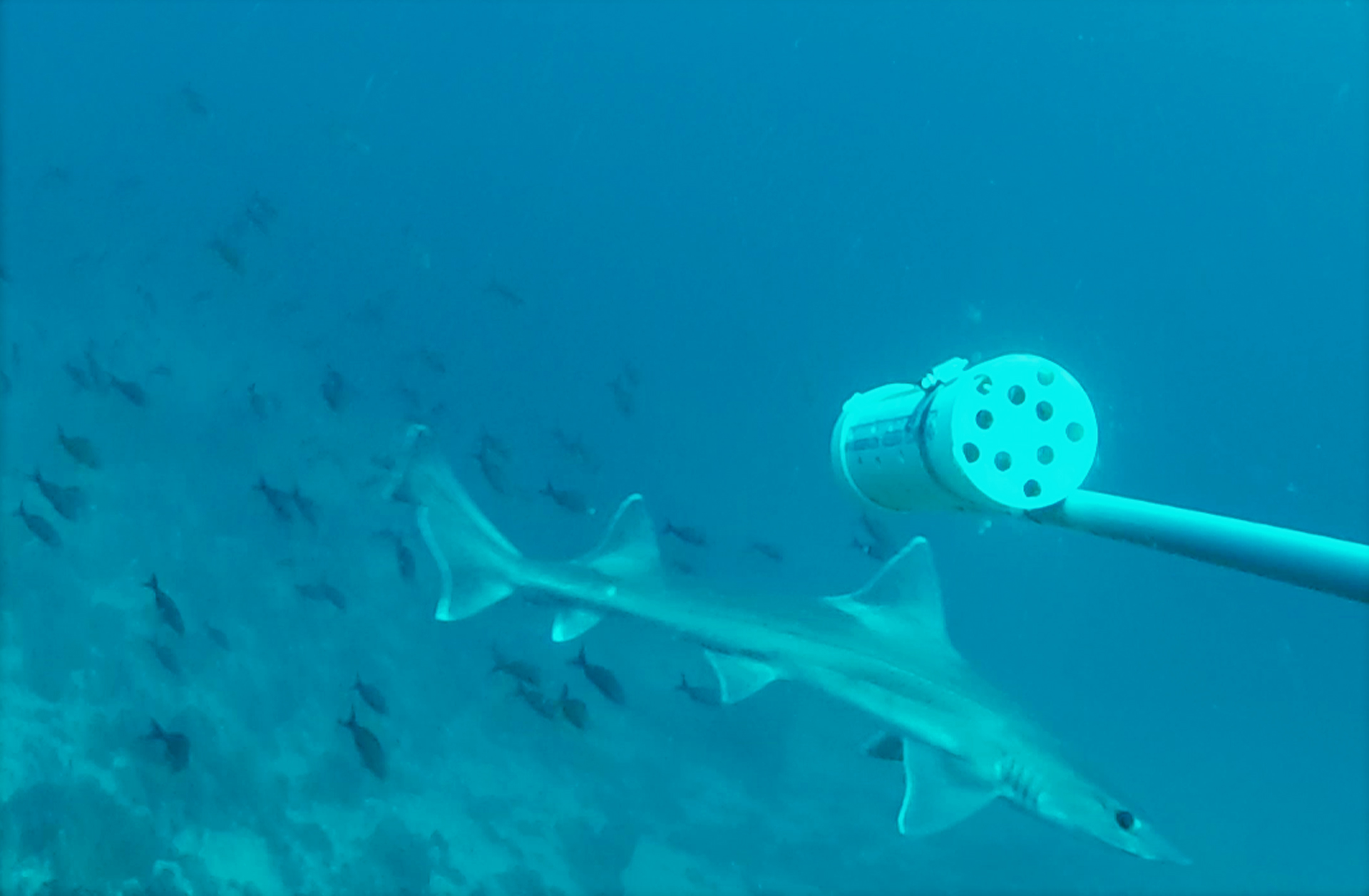
A shy smooth-hound shark Mustelus sp. swims past a camera. Photo © Charles Darwin Foundation
Towards the end of 2015, the National Oceanic and Atmospheric Administration predicted a very strong El Niño event, saying, ‘The latest El Niño Southern Oscillation indices reached their highest levels for the Eastern Pacific region this year. While upper level easterly winds persisted over the central and eastern Pacific, surface temperature hotter-than-average anomalies are consistent throughout the region and indicate a 95% chance for El Niño Southern Oscillation to develop and persist throughout 2016.’
The Charles Darwin Foundation and its partners realised that here was an unprecedented opportunity to document the effect of this unusual climatic phenomenon on shark and fish populations in the Galápagos. Previous strong El Niño events in 1982–83 and 1997–98 had a profound impact on marine communities, causing a shift in habitats and species assemblages. Given that some climate models suggest that climate change will result in more frequent El Niño events, this research project could provide some evidence about the possible impacts of climate change on highly mobile species like sharks.
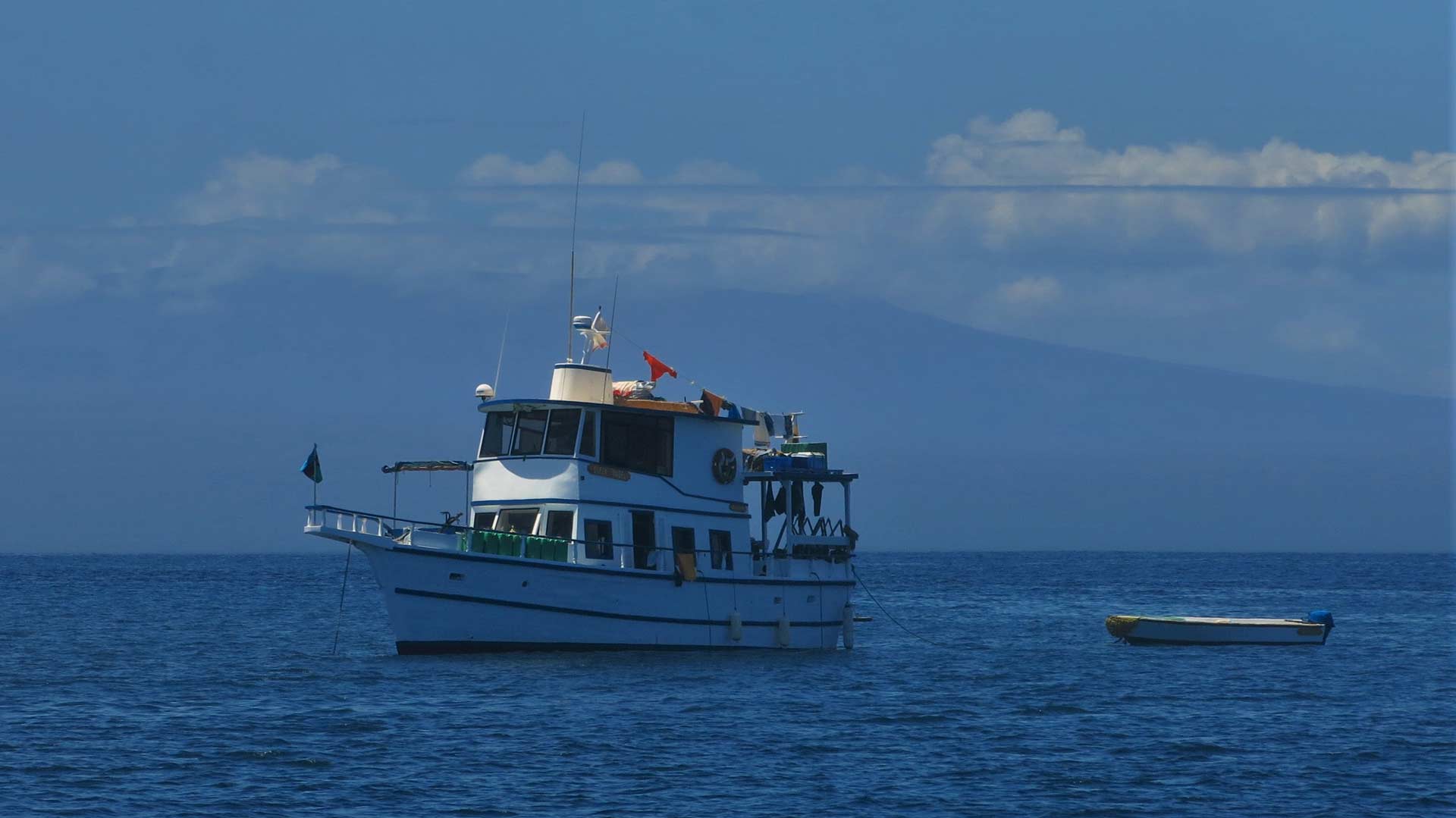
The compact M/V Queen Mabel and its modest wooden skiff served as the operating base for the researchers in the west of the archipelago. Photo © Charles Darwin Foundation
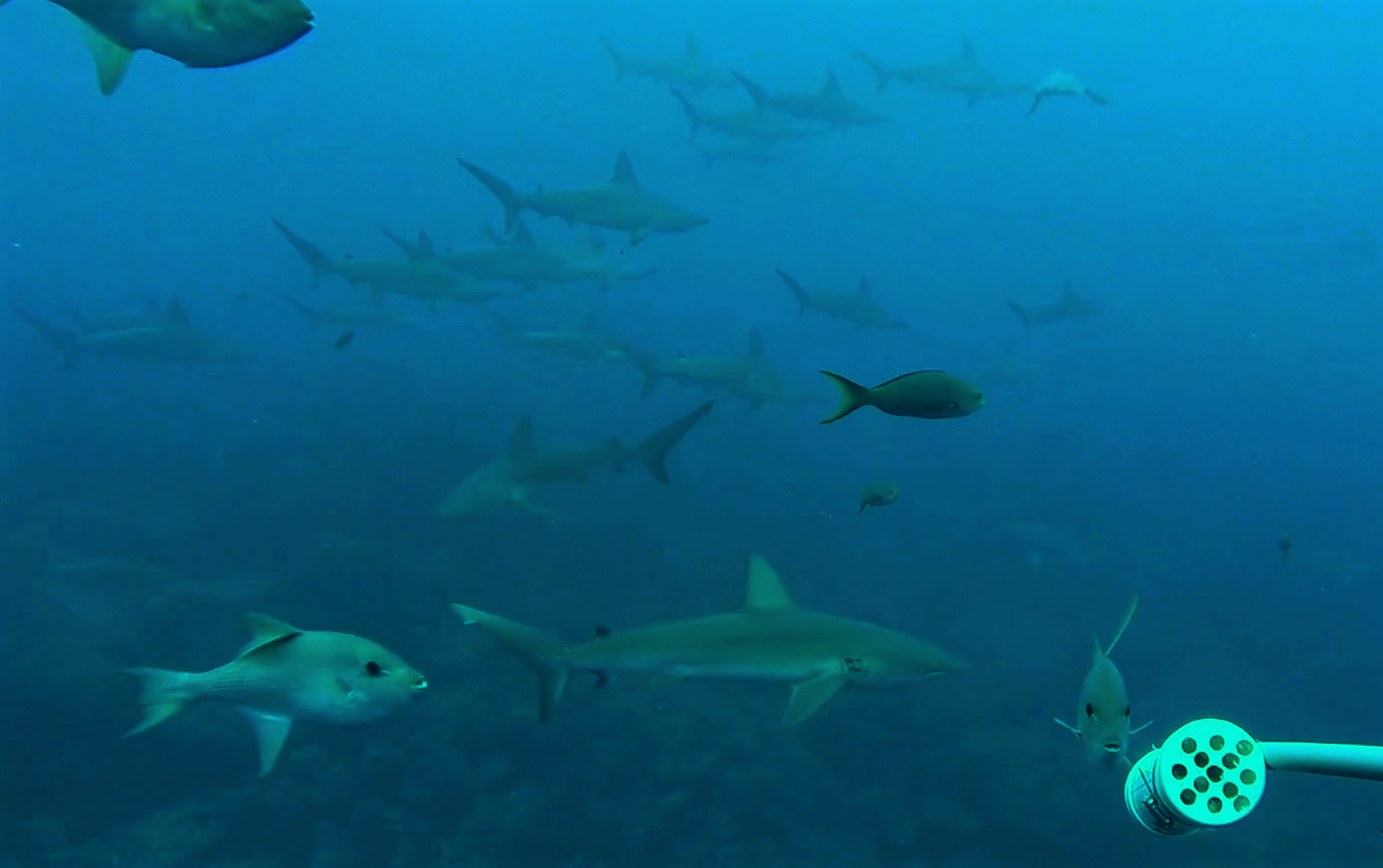
Galapagos Carcharinus galapagensis and scalloped hammerhead Sphyrna lewini sharks at the Darwin and Wolf Sanctuary, in which fishing has recently been completely banned by the Ecuadorian government. Photo © Charles Darwin Foundation
Thanks to additional support from the Save Our Seas Foundation, scientists from the Charles Darwin Foundation were able to start a second consecutive year of this ambitious study. The 2016 warm season (December–May) campaign has just recently been completed, with a total of 272 cameras deployed across the entire marine reserve (Fig.1). ‘The campaign went very smoothly. I think we’ve built on our experience from last year to master the art of BRUVing,’ says researcher Etienne Rastoin, who led most of the field work this season. Plans are being made to sample again in August and September, when the cold season part of the research begins.
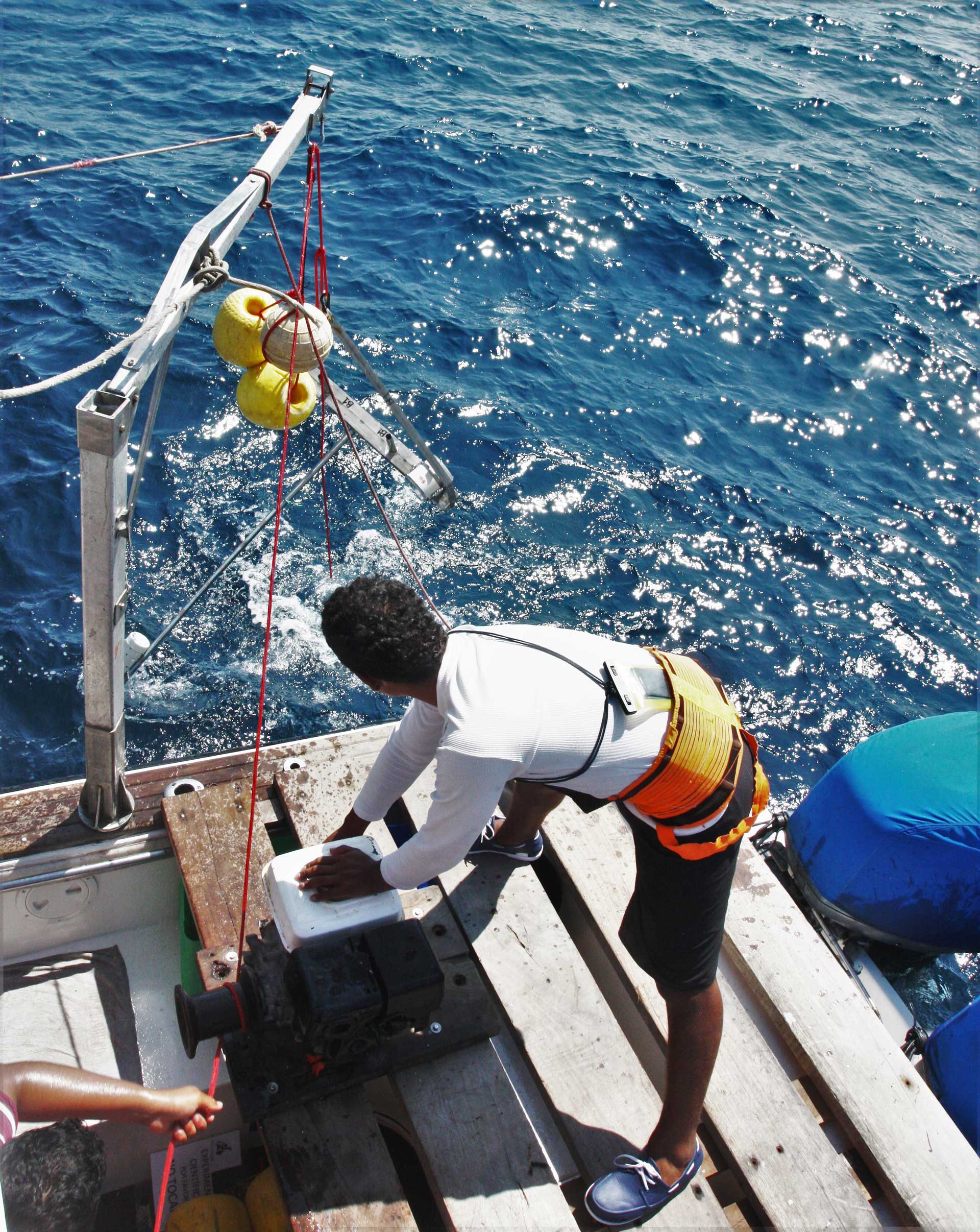
The 80-pound stereo-video riggings are deployed and recovered from a custom-built wooden platform at the stern of the M/V Valeska. Photo © Charles Darwin Foundation
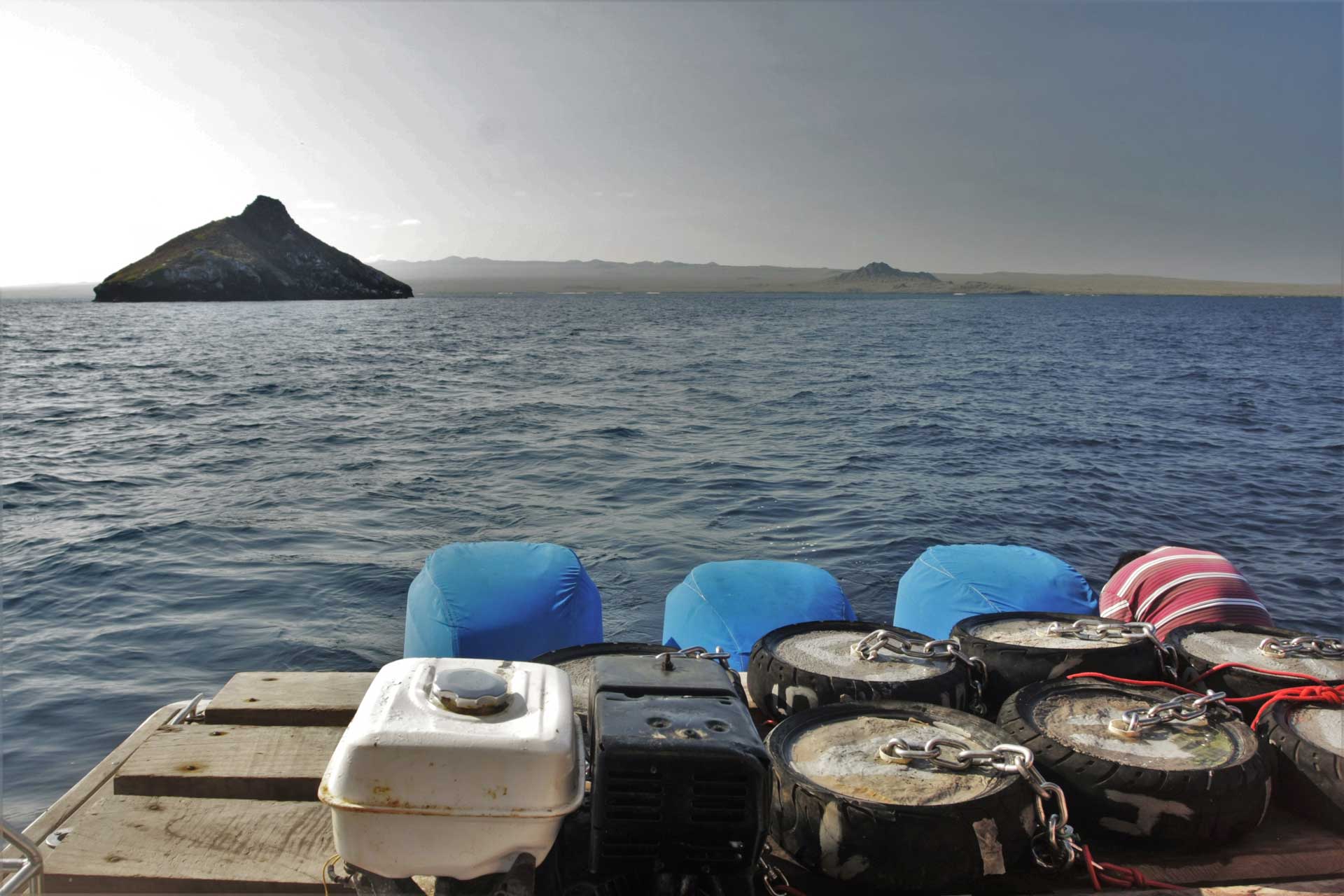
Anchoring camera weights are lined up as the boat navigates to the next study site. The volcanic landscape of Santiago Island lies in the distance. Photo © Charles Darwin Foundation
Thomas Peschak, National Geographic photographer and the Save Our Seas Foundation’s director of conservation, accompanied the scientists to the islands of Fernandina and Isabela in the western part of the archipelago. ‘The Galápagos is mind-blowing and matches its reputation,’ he enthuses. ‘These are the most productive 10 days of photography I have ever had. It’s my first visit and this place has just made its way into my top three wildest places on the planet!’
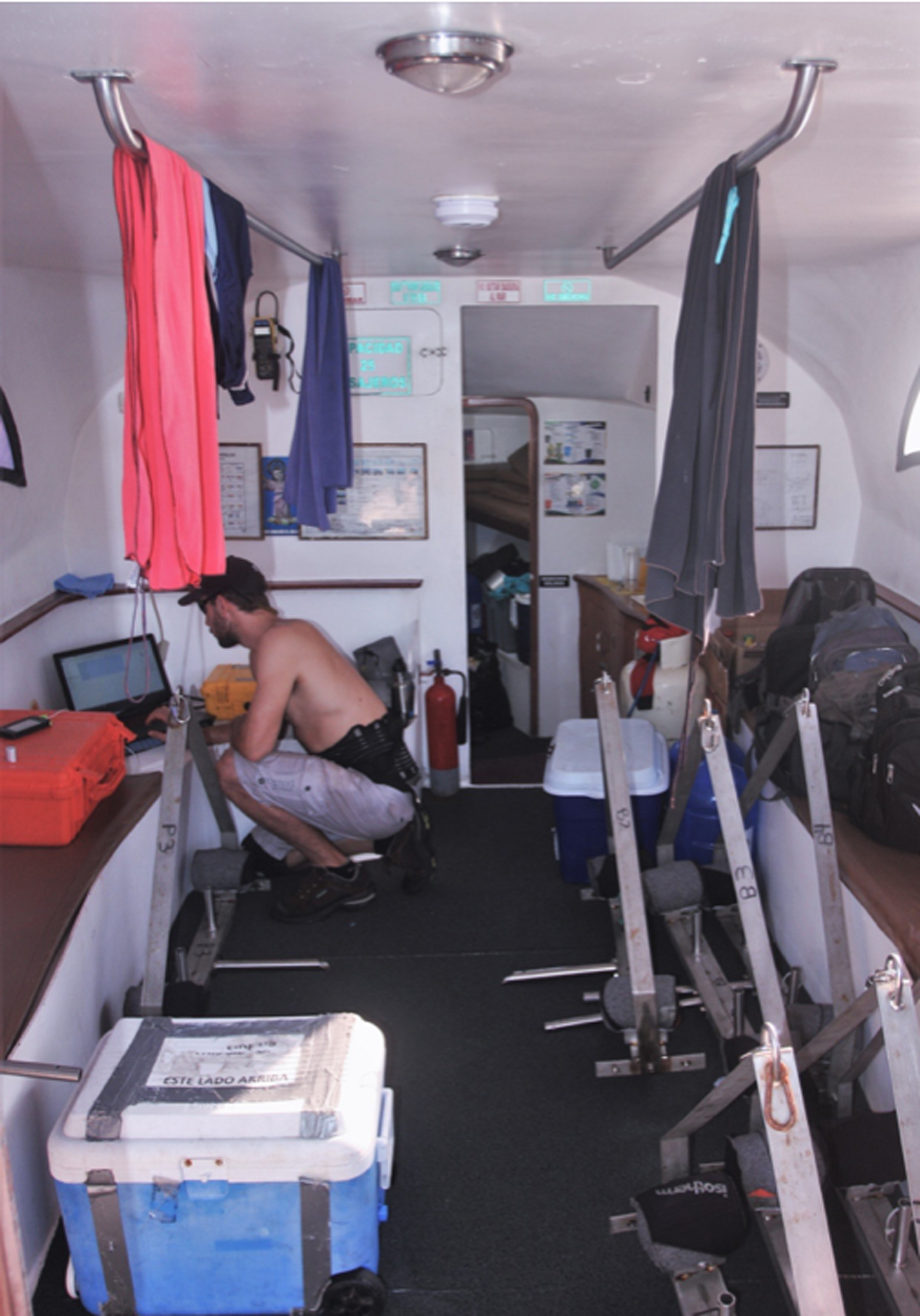
The space inside the 30-foot-long M/V Valeska is very limited for the seven people aboard. It accommodates a storage area for the cameras, sleeping bunks and a kitchen, as well as a computer station where the 500+ GB of video filmed each day are downloaded. Photo © Charles Darwin Foundation