
Manta ray bay
Guy has found paradise: the world’s largest known population of manta rays. He has been studying Maldivian mantas since 2005, providing critical insights on what he believes to be the most intelligent fish in the sea.
Guy Stevens
I have been fascinated by the natural world all my life and growing up on a farm in south-western UK provided me with a seemingly limitless supply of weird and wonderful creatures to discover. I always knew that I wanted to make studying animals my career, but it was only when I was given a tropical fish tank at the age of 11 that my passion for the underwater world began. From that moment forward I would say ‘I want to study fish!’ when asked what I planned to do when I grew up. True to my word, I progressed...
Conservation management of Maldivian manta rays and their habitat
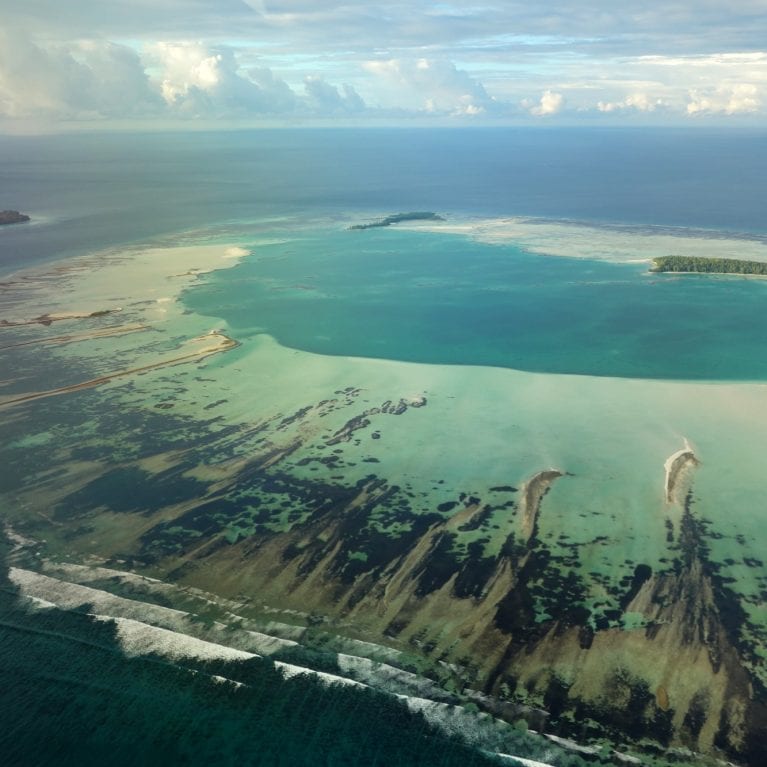
The key objective of this project is to research the life cycle and habitat use of the Maldivian manta population, while also working with the country’s government, resort guests, local communities and other visitors to create greater awareness and understanding of these graceful rays.
Its abundance of marine life has made the Maldives one of the top dive destinations in the world, and manta rays continue to be one of the ‘must-see’ highlights for most of the country’s visitors. Manta rays are therefore extremely important for tourism, which is by far the largest source of revenue for the Maldives. Despite this, Maldivian law does not yet protect manta rays specifically, and as natural resources continue to be stretched, the associated negative impacts are increasingly affecting the country’s mantas.
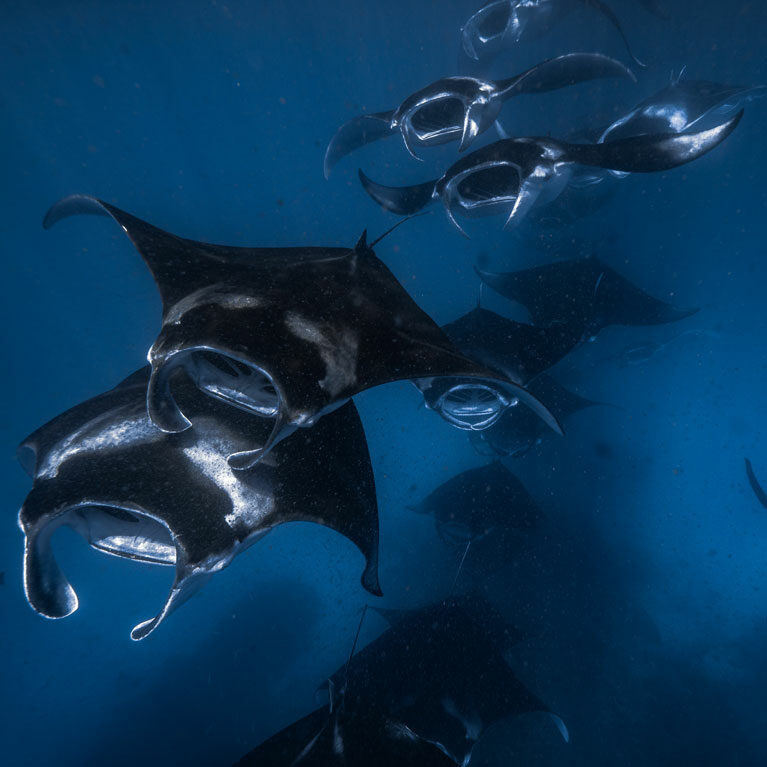
The Maldives has a massive population of manta rays. The total manta population for this small country in the middle of the Indian Ocean is estimated to exceed 10,000 individuals. In three years of data collection, the Maldivian Manta Ray Project has already built a comprehensive database of over 5,000 manta sightings and identified more than 1,500 different mantas with new individuals being sighted on a regular basis.
Maldivian mantas are year-round residents, migrating across the country’s 26 atolls with the changing monsoons as they follow seasonal shifts in their planktonic food source. These nutrient-rich waters support huge quantities of marine life and it’s not uncommon to find more than 150 manta rays feeding in surface waters together with half a dozen whale sharks at one of the project’s key study sites. These amazing feeding aggregations are one of the world’s natural underwater spectacles, attracting increasing numbers of tourists each year. The Maldivian Manta Ray Project and SOSF are working hard with local stakeholders and the Maldivian government to put in place management plans to protect this site for the future.
This project aims to continually expand the current manta ray sightings database. However, although the photo-ID database is a simple and very useful tool for studying manta rays, it does have limitations as it can only tell researchers where the mantas are at the time of the sighting. To collect data on the large and fine scale movements of individuals, one has to tag manta rays, and this project plans to continue its passive and active acoustic tagging in the coming year, as well as experiment with the new Fastloc GPS systems, which will hopefully be the key to successfully satellite tagging of manta rays in the Maldives.
Documenting the mating behaviour and reproductive cycle of the resident mantas is another area where the project is particularly keen to expand its research. Courtship rituals and pregnancies are regularly documented in the Maldives and matings have been recorded on several occasions. Furthermore, mating occurs at distinct times of the year at specific locations in the Maldives and it is possible to follow the matings and pregnancies of individuals within the population from one year to the next. This is extremely important data because virtually nothing is known about the reproductive strategies of manta rays and the Maldivian Manta Ray Project is in a unique position to document this.
The project also aims to undertake several fieldtrips in the coming year. The first will be to discover new manta feeding and cleaning sites in the Northern Atolls of the Maldives, which are still relatively untouched and unexplored. The hope is that some of the individuals seen at the project’s current study sites will be sighted so that links can be made between seasonal feeding grounds. The second trip will be to the Sea of Cortez with Dr Robert Rubin to document the giant manta rays congregating at the isolated sea mounts of the Revillagigedos Islands.